What's Actually Free to Do in the Smoky Mountains? What Our Readers Say (Plus What We Verified)
We asked our Facebook followers what's actually free to do in the Smokies. Here's what they said, plus the current parking-tag fees, seasonal picnic-area hours, and the popular swimming spot we're not going to recommend.
By Shandi
Travel Expert
Published July 8, 2026
"What's actually free to do in the Smokies these days?" We asked our Facebook followers a version of that question, along with a few related ones: your favorite pulloff along Newfound Gap Road, the most underrated winter spot in the park, and where you go when the crowds get to be too much. Across four posts we got more than 1,600 comments back, and the overlap was obvious — hiking, picnicking by a stream, and just driving through with the windows down came up again and again. A smaller, louder argument also broke out in the replies about whether any of this is really "free," and that one turned out to be worth settling. Here's what our readers said, grouped and paraphrased (no names — that's not what this was for), plus what we could verify.
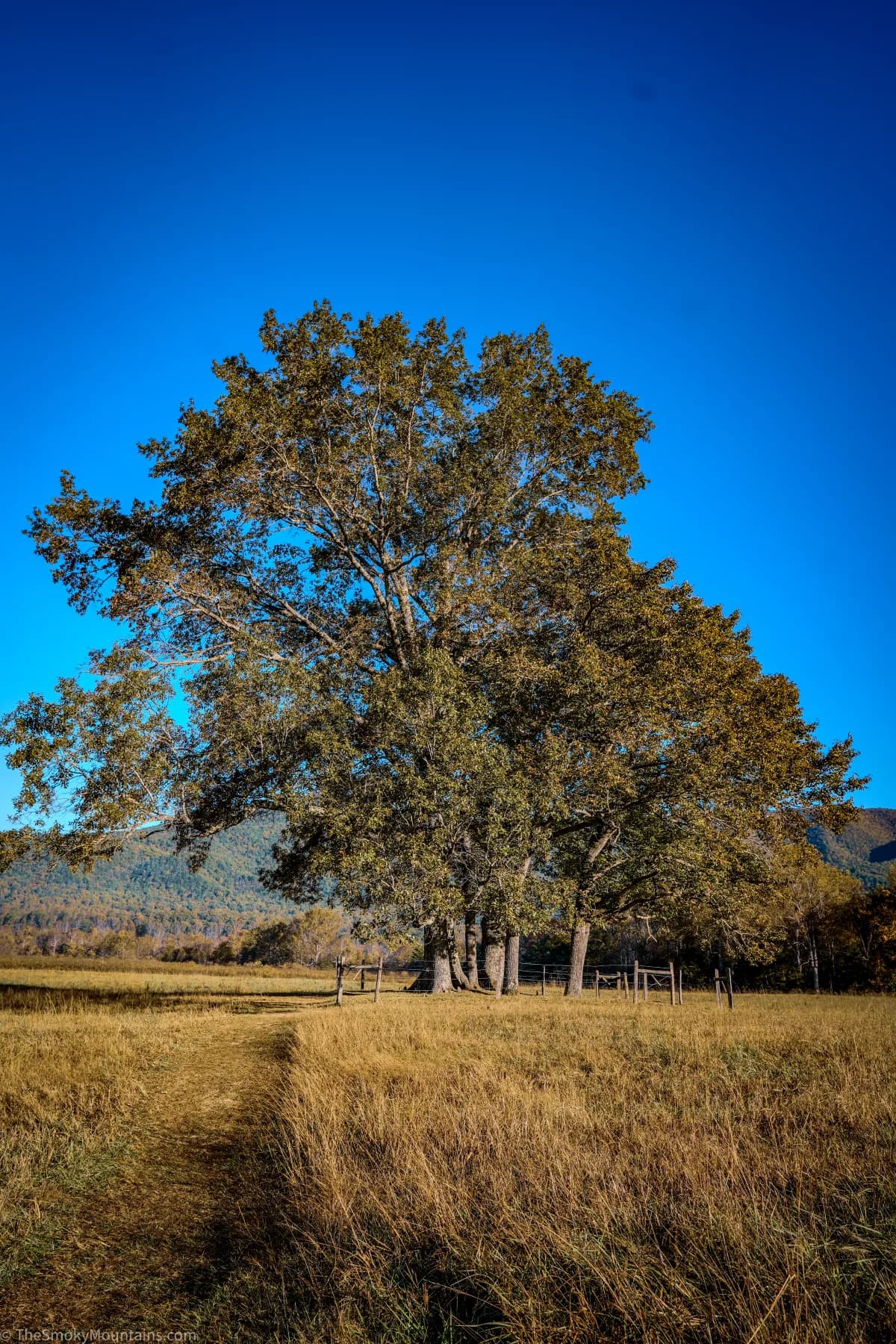
Cades Cove in the fall — still the answer we saw more than any other.
The free activities our readers keep coming back to
One comment basically summed up the whole thread on its own: hike, picnic by the water, then wade in the stream afterward to cool off, and repeat the next day. A more detailed version laid out an entire free day almost move for move — drive Cades Cove and/or the Roaring Fork Motor Nature Trail, picnic at the Chimneys, drive up Newfound Gap and on to Kuwohi (still widely known as Clingmans Dome) for the views, swing by Oconaluftee hoping to see elk, then browse the shops in Cherokee. One reply joked that the itinerary doubled as a great way to keep everyone else's favorite spots to themselves — which, fair.
Past that, the specific spots people named most were Elkmont for sitting by the river, Deep Creek, and the general instruction to just get on any marked trail and hike. One reader's exact rec — hike, picnic at the Chimneys or Metcalf Bottoms, then lie down in the stream to let the cold water do its thing — is a genuinely solid plan: the Chimneys Picnic Area is open now and stays open through late November before closing for winter, and Metcalf Bottoms keeps its south loop running year-round even after the rest of it closes for the season, right at the trailhead for the historic Little Greenbrier School.
The simplest answer by far, though, wasn't a place at all. Multiple people just said some version of slow down, look at the mountains, or sit on the porch. If you're renting a cabin with a real view, that answer is free every single day of your trip — browse cabins in the area (code TSMFRIENDS for a discount) if a deck with a view is what you're after.
One commenter pushed back hard on the whole idea, arguing hiking "isn't free because you have to buy a pass," and picked up a wave of agreement in the replies. They're right to flag it, but "pass" isn't quite the word for what's going on. Great Smoky Mountains National Park charges no entrance fee at all — it's one of the only major national parks in the country that doesn't, by law. What you can end up paying for is a parking tag, and only if you park longer than 15 minutes anywhere in the park. Since almost any hike or picnic stop runs longer than that, you'll want one in practice: $5 for the day, $15 for the week, or $40 for the year, same price regardless of what you're driving. The reader who called it "not quite free, but $5 a day is close enough" had it about right.
A pulloff along Newfound Gap Road — the most-mentioned free drive in the comments.
Where to go when the crowds get to be too much
When we asked this directly, the answers split into two groups: quieter places altogether (Deep Creek, Elkmont, a cabin porch) and timing tricks for the popular spots. The timing tricks hold up. The busiest hours in the park run roughly 10am to 6pm, so arriving before 8am or waiting until after 4pm skips most of the day's traffic. Saturdays and holiday weekends are the worst; a weekday visit, especially Tuesday through Thursday, is dramatically quieter.
The one schedule-based tip worth planning an actual trip around: Cades Cove Loop Road closes to motor vehicles altogether — all day — every Wednesday from May 6 through September 30, 2026. Bikes and walkers only. No cars means no traffic, full stop. If you're staying near the loop, Townsend sits right at that quiet entrance.
About the "hikers disappear" comment
One reader followed up their traffic talk with something sharper: Great Smoky Mountains National Park runs somewhere around 100 to 150 search-and-rescue operations a year. Someone else in the thread quickly pointed out that's out of the millions of people who visit annually — and both of those are true, worth keeping in the same sentence. This isn't a park where people wander off constantly, but it is real wilderness with real risk, especially once you're off a marked trail. Stick to marked trails like Alum Cave, tell someone your plan, and turn around when weather turns, and this is background statistics, not a reason to stay off the trails. (One trail worth a specific note: the Chimney Tops Trail only reaches an observation platform these days — the last stretch to the actual summit has been closed since wildfire damage in 2016 and hasn't reopened.)
Oconaluftee Visitor Center — the meadow here is the most reliable elk viewing in the park.
One popular answer we're not going to repeat
A few readers named swimming at the Sinks as one of their favorite free things to do. We're not passing that one along, even though it came up more than once. The Sinks is worth the stop as a scenic overlook — the water crashing over the rock ledge is one of the more photogenic five-minute stops on Little River Road — but the National Park Service specifically warns against swimming or jumping there. Greenbrier is a nearby alternative worth checking out instead. Look at it. Don't swim in it.
Ticket Deals
Tickets in Gatlinburg
Our honest take
Reading through all of this, the pattern isn't really "what's free" so much as "what people actually do with the free stuff once they're here" — and it's simpler than a lot of guides make it sound. Pick one drive, one trail, one place to sit by water, and leave enough time to not rush any of it. The busiest, most-photographed stops (Cades Cove, Newfound Gap) are worth it, but only if you time them around the crowds instead of fighting through them. If you'd rather skip the debate entirely, the "just sit and look at the mountains" answer that showed up over and over in the comments is free every day of the year and doesn't require a pass of any kind.
If downtown is more your speed than a cabin porch, Gatlinburg puts you a short walk from the park entrance itself, with the free trolley covering most of what a car would otherwise need to find parking for.
FAQ
Is Great Smoky Mountains National Park really free to enter?
Yes. There's no entrance fee anywhere in the park. The only cost is a parking tag, and only if you park somewhere for more than 15 minutes: $5 for the day, $15 for the week, or $40 for the year.
What's the best free scenic drive in the Smokies?
Newfound Gap Road up to Kuwohi (formerly Clingmans Dome) and the Roaring Fork Motor Nature Trail were the two readers mentioned most. Roaring Fork closes for part of the winter each year, so check current conditions if you're visiting outside spring through fall.
Where can I reliably see elk in the Smokies?
The meadow around the Oconaluftee Visitor Center near Cherokee, NC. Early morning and late afternoon are best, and the fall rut (September–October) is the most active season. Stay at least 150 feet away — it's the law, not just a courtesy.
Is it safe to swim at the Sinks?
We wouldn't recommend it. The National Park Service specifically warns against swimming or jumping at the Sinks, and directs people who want to get in the water toward the calmer Greenbrier section instead.
Planning a Smokies trip?
Save what's useful here, then check stays before dates fill up.