
Smoky Mountain Files · Verified History
Early on September 11, 1985, a Knoxville man looked outside and saw a parachutist lying in his gravel driveway.
The jumper wore combat fatigues, a bulletproof vest and night-vision equipment. Police found aircraft keys, weapons, cash, gold coins, survival food and a duffel holding 34 kilograms of cocaine.
His name was Andrew Carter Thornton II.
Before daylight, a twin-engine airplane had already struck a mountain near Hayesville, North Carolina. Three months later, investigators following the missing cocaine into north Georgia found a 175-pound black bear dead beside a torn shipment.
The movie begins where the records end.
The bear died in Georgia’s Chattahoochee National Forest. The flight tied together north Georgia, far western North Carolina and Knoxville across the wider Southern Appalachian region.
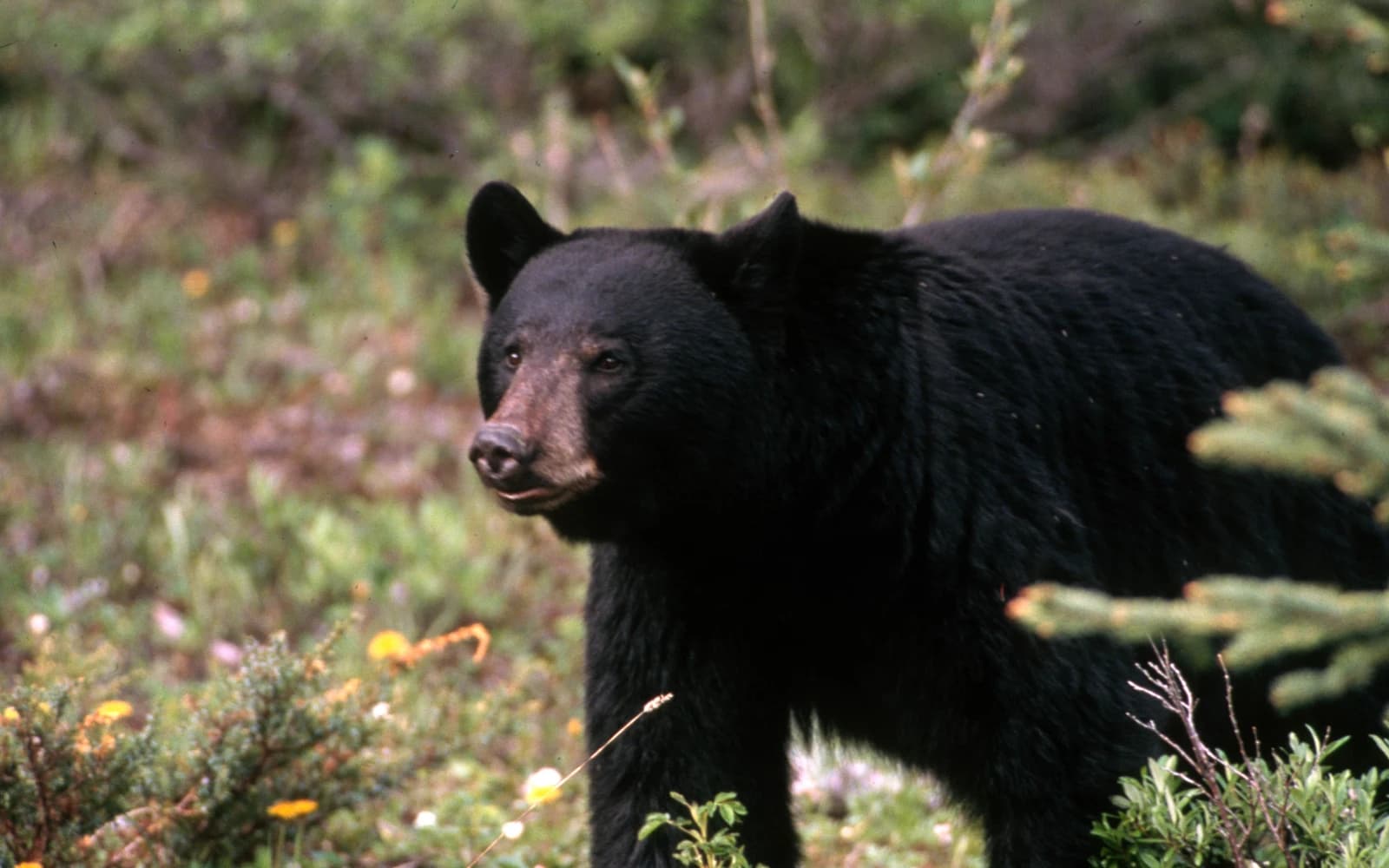
Photo note: The hero image shows a representative American black bear photographed by the U.S. Forest Service. No verified photograph of the animal found in 1985 appears in this story.
The man in the driveway
Thornton carried the résumé of a man trained for the jump—and the criminal record of someone already caught smuggling drugs.
He came from a prominent Kentucky family, served as an Army paratrooper and spent years with the Lexington Police Department, including work in narcotics and intelligence. He earned a law degree. By 1985, he also had a federal drug-smuggling conviction and was serving probation.
The equipment found with his body looked prepared for a dangerous landing. His main parachute had opened only partly. Contemporary investigators believed he had jumped from a Cessna 404 carrying cocaine north through the Southern Appalachians.
The aircraft kept going.
A plane crosses the dark mountains
Fishermen near Hayesville heard an airplane pass overhead around 1 a.m. They could not see it in the night sky. Moments later, a flash appeared on the side of a mountain, followed by fire and an explosion.
The National Transportation Safety Board identified the wreck as a Cessna 404, registration N128SP. Searchers found no one in or around it.
The NTSB report joins the two scenes through one small object: a key to the crashed aircraft was recovered from the dead parachutist several miles away.
Its finding is blunt. The aircraft had been intentionally left unattended with its engines running. It descended without control into mountainous terrain.
The full NTSB final report ATL85LA273 records the aircraft identity, the empty cockpit and the key that connected the wreck to Thornton.
Hayesville lies in the mountains of far western North Carolina. The impact site gave investigators the end of the flight. The cocaine dropped earlier along the route led them south.
Duffel bags in the forest
Within days, U.S. Forest Service officers found three cargo bags attached to a parachute in Chattahoochee National Forest. Contemporary reporting placed 99 kilograms of cocaine inside them.
Investigators continued searching the flight path between Georgia and Knoxville. The terrain held countless places where a dropped bag could disappear beneath trees and brush.
In December, that search produced the part of the case the world remembers.
A torn duffel lay on a hillside in the national forest. Packages had been opened and cocaine was scattered nearby. Beside them were the remains of a black bear.
The animal weighed about 175 pounds.
What the medical examiner found
Georgia’s chief medical examiner, Dr. Kenneth Alonso, examined the remains. He attributed the bear’s death to acute cocaine intoxication.
Alonso measured the bear’s intake in grams. He estimated at least two grams and probably two to four grams, with the possibility of more.
The bags near the animal had once held about 75 pounds of cocaine, according to contemporary reports. That number describes the cache at the scene. The medical evidence supports an intake of at least two grams.
The record contains no attack, chase or human casualty caused by the animal. Investigators found the bear dead.
How the movie changed the ending
The 2023 film Cocaine Bear keeps one extraordinary fact: a black bear encountered cocaine dropped from an aircraft in a Southern national forest.
Then the screenplay gives the animal a different fate. Its bear survives long enough to pursue more cocaine and terrorize people across the forest.
No one encountered an intoxicated bear in the documented case. Thornton died during his jump, the empty aircraft crashed, and investigators found the bear dead three months later.
Three places, one flight
| Place | What happened there |
|---|---|
| Knoxville, Tennessee | Thornton’s body landed in a residential driveway with cocaine and the aircraft key. |
| Near Hayesville, North Carolina | The unattended Cessna 404 struck mountainous terrain and burned. |
| Chattahoochee National Forest, Georgia | Officers recovered cocaine dropped along the route and later found the dead bear beside a torn cache. |
A separate Smokies cocaine case
Another airplane-and-cocaine story belongs to Sevier County four years earlier.
In March 1981, investigators seized more than 600 pounds of cocaine from a Beechcraft Queen Air at the Gatlinburg-Pigeon Forge Airport. Gerald Hemp was later convicted in that case and escaped from a Florida work-release center in 1984.
Thornton’s route ended in September 1985 across Knoxville, Hayesville and north Georgia. The two cases share a region and an era. Their aircraft, people, dates and investigations are separate.
Our full account of the earlier case appears in The Dentist Appointment: Gerald Hemp’s Disappearance.
The case file
| Claim | Record status |
|---|---|
| The bear ate 75 pounds of cocaine. | Unsupported. About 75 pounds had been in the nearby bags. The medical examiner estimated an intake of at least two grams, probably two to four grams. |
| The bear lived in Great Smoky Mountains National Park. | Wrong location. It was found in Georgia’s Chattahoochee National Forest. |
The story the records leave behind
“Cocaine Bear” became a perfect two-word legend. The documents leave something stranger and sadder.
A former police officer crossed the mountains in a cocaine-loaded aircraft and jumped into the dark. The plane flew on without him. Packages fell into a national forest. A bear found one before investigators did.
By December, Thornton and the bear were dead. The Cessna was wreckage on a North Carolina ridge. The rest became folklore, then a movie.
Sources and reporting notes
- National Transportation Safety Board: Aviation Investigation Final Report ATL85LA273.
- The Washington Post: “Death of a Sky Smuggler,” October 13, 1985.
- The Washington Post: “Cocaine Killed Bear,” December 23, 1985.
- Associated Press: the original case and the film’s fictional additions.
- U.S. Fish and Wildlife Service: public-domain American black bear image and rights record.
Method: The aircraft sequence follows the NTSB report. Thornton’s identity, the drug recoveries and the bear’s examination come from contemporary reporting. Claims from later entertainment coverage were checked against those records before inclusion.
Image rights: The hero is a representative American black bear photographed by the U.S. Forest Service and released into the public domain. No verified photograph of the 1985 animal appears in this story.
Corrections: We update Smoky Mountain Files when stronger records become available. Send documented corrections through the contact page with the record supporting the change.