
Smoky Mountain Files · Unsolved
On July 10, 1984, Gerald Lyle Hemp left a minimum-security work-release center in Lantana, Florida, for a dentist appointment.
He kept the appointment.
He never returned.
Hemp was serving a 40-year Tennessee sentence. Less than two years earlier, authorities had captured him under another name. Three years before that, a twin-engine airplane carrying more than 600 pounds of cocaine had landed at a small Sevier County airport.
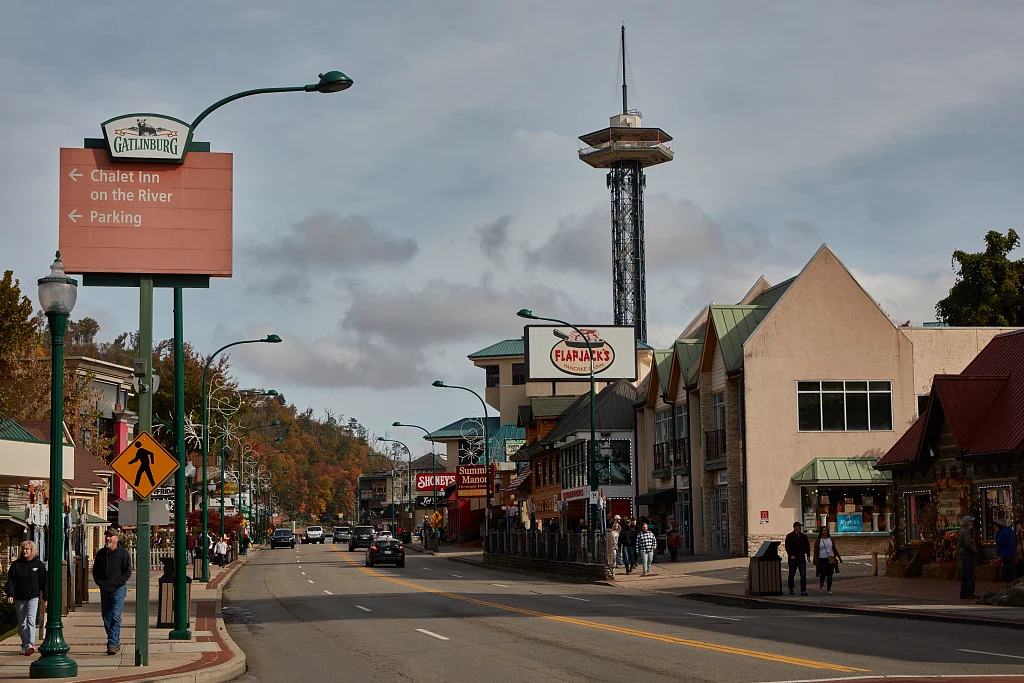
In Gatlinburg, people remembered another name: Jerry.
Three years earlier: A plane in the mountains
The Sevier County Airport sat about two miles southeast of downtown Sevierville, north of Pigeon Forge and Gatlinburg. The original runway had been built in 1966. When Gatlinburg and Pigeon Forge took over its operation in early 1982, the field had three hangars, 15 airplanes and a 4,500-foot runway.[2]
On March 23, 1981, a twin-engine Beechcraft Queen Air landed there at night after a route contemporary reports traced from Colombia through Florida.[3]
The next day, Tennessee Bureau of Investigation agents found the cocaine.
One early report placed the load at 613 pounds. Other contemporary coverage and later court reporting used 614. Both figures describe more than 600 pounds of nearly pure Colombian cocaine reaching Sevier County aboard a private airplane.[4][5]
Law enforcement supplied an estimated street value of more than $200 million by assuming the cocaine would be diluted and divided for sale. The verified physical load remains the firmer measure.
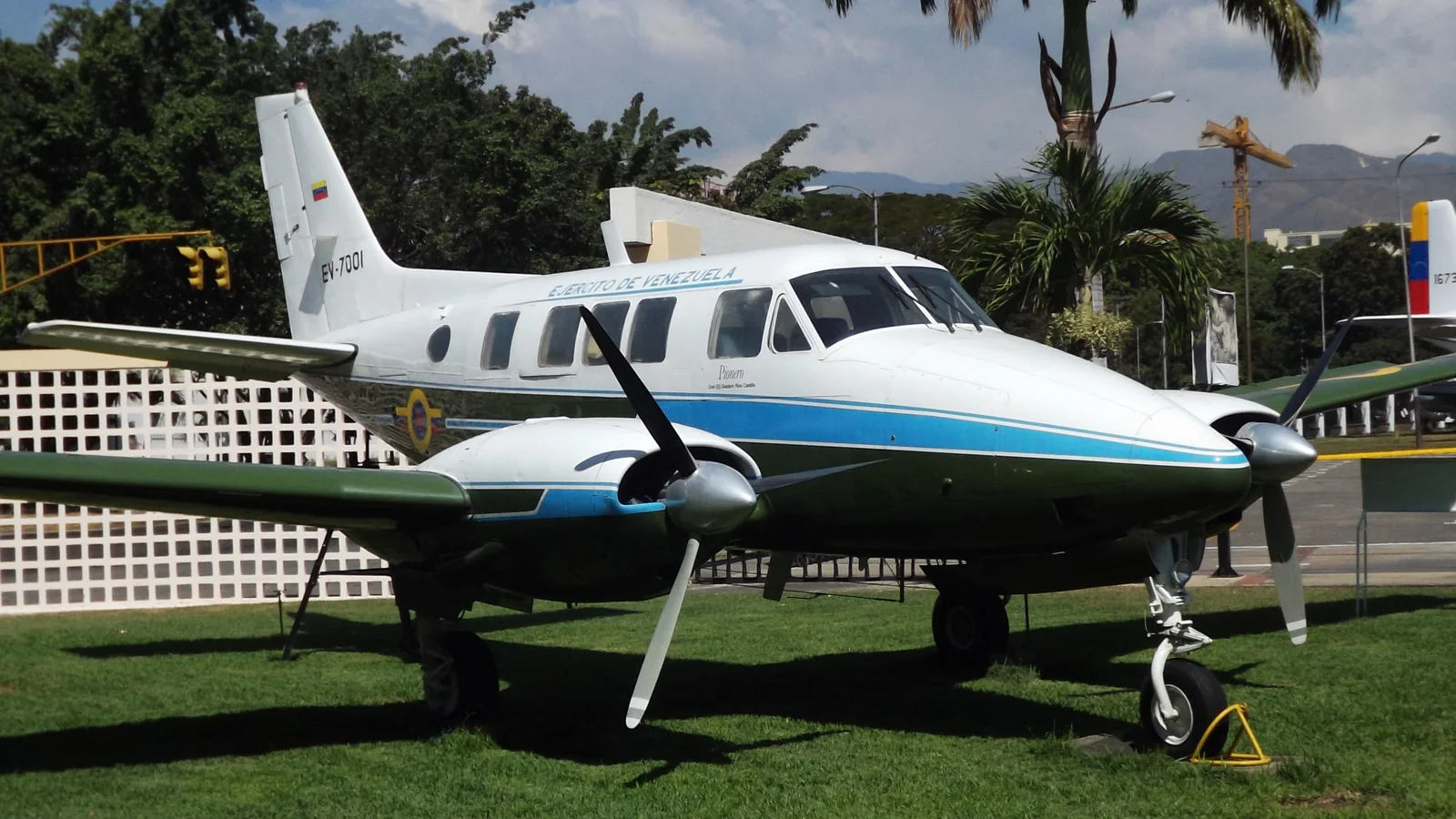
Clarence Dennis Newell was identified as the pilot. Charles Leslie Kageler Jr. was identified as the copilot. Investigators believed Kageler's father, Charles Leslie Kageler Sr., and Hemp were waiting at the airport. By the time agents understood what had landed in Sevier County, the four men connected to it had scattered.
The timing made another detail difficult to dismiss. Hemp and the elder Kageler had been discussing a lease of the airport with local officials. In the same year the county voted to close the field, the men later accused of arranging the cocaine flight had been trying to establish a legitimate foothold there.[2][3]
The man Gatlinburg called Jerry
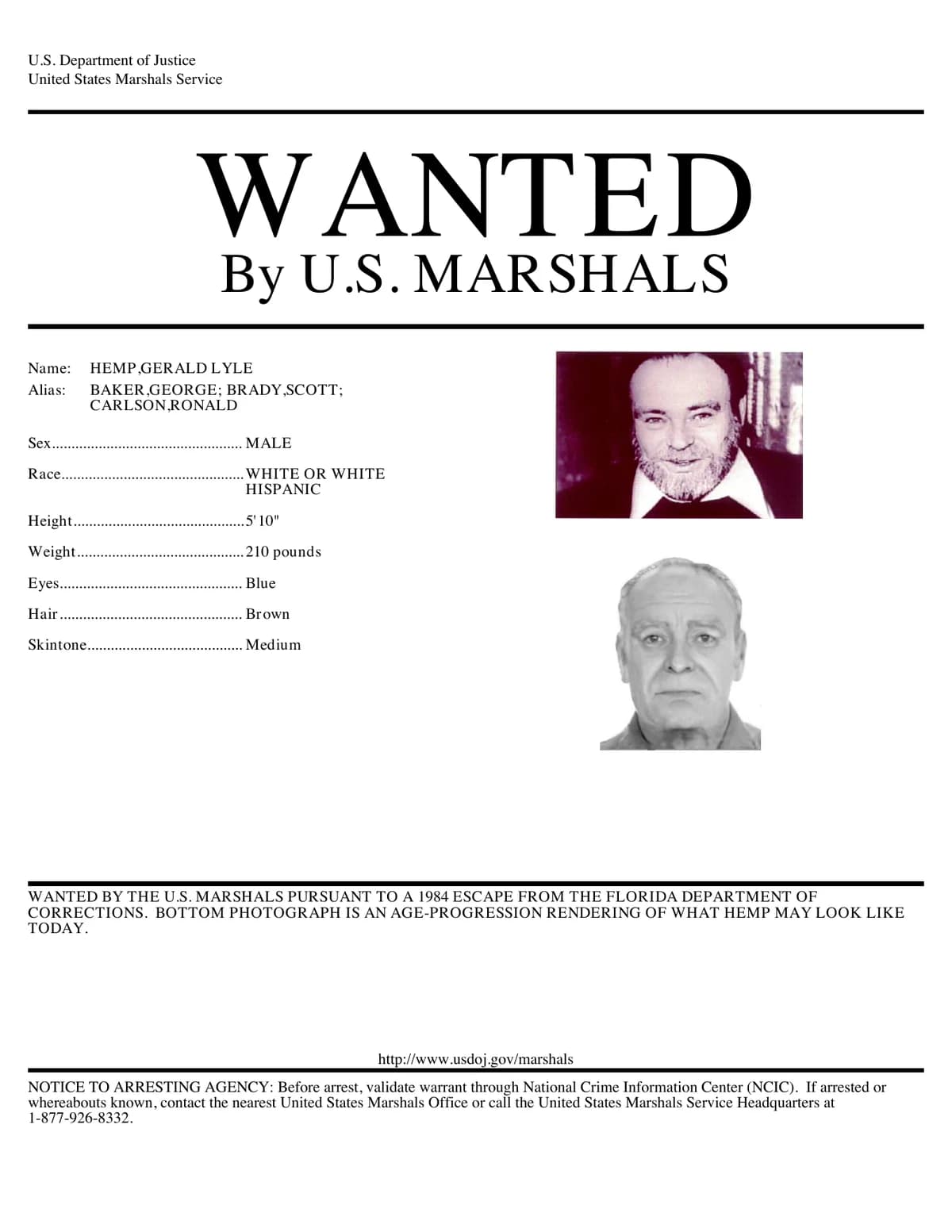
Federal authorities knew him as Gerald Lyle Hemp. The current U.S. Marshals file also lists George Baker, Scott Brady and Ronald Carlson. In Gatlinburg, he had presented himself as Jerry Whittier.[1]
Around Gatlinburg, people remembered Jerry Whittier as sociable and apparently generous. Federal records identify Gerald Hemp as a convicted cocaine smuggler who later escaped custody. They were the same man.
Two people commenting on the Knox News Facebook post separately recalled that Jerry bought bicycles for children at a Sevierville home. One remembered helping with a Christmas event and receiving an unusually large tip. Another said the home's founder was his great-grandmother and remembered visiting Hemp after his arrest. These public recollections remain unsupported by a receipt, event program, contemporary photograph or court record.
Oral history preserves how a community experienced a person. Documents and independent witnesses are still needed to settle disputed dates, ownership claims and criminal allegations.
The Facebook discussion beneath the Knox News post produced an immediate contradiction over a house above Gatlinburg. Some commenters connected Hemp to a property remembered as the “cocaine castle.” Others who said they knew the people or properties involved rejected the claim. This article has not established the claim through a deed or other property record.
The men who scattered
The airport investigation moved quickly after the four men fled.
Authorities arrested Newell in May 1981. They arrested the younger Kageler in June. At his trial that fall, Kageler Jr. said his father had described the South American trip as a weapons run for anti-Communist fighters. He maintained that he did not understand the cargo was cocaine until the flight was underway. Prosecutors argued that he knowingly joined an illegal operation, and the jury convicted him.[4]
Kageler Jr.’s testimony placed the weapons-run claim in the public record in 1981.
The elder Kageler never reached a courtroom in this case.
On June 21, 1982, his body was recovered several miles off Jupiter Beach, Florida. A Palm Beach County investigator described a severe bruise to the head, and later law-enforcement reporting treated the death as an apparent killing.[6]
One associate was dead. Hemp was still missing.
Guns, cocaine and the story from the witness stand
Hemp later gave his own version. During his Tennessee trial, he maintained that his aviation work involved supplying weapons to anti-Communist causes in Central and South America and denied knowingly participating in the cocaine shipment.[8]
No declassified assignment, payment record, personnel file or corroborating government document reviewed for this article connects Hemp to the CIA. The historical record establishes that he made an arms-running defense. His alleged government role remains unproven.
George Baker is arrested
On September 30, 1982, authorities arrested Hemp in Pompano Beach, Florida. He was living under the name George Baker—the same alias that remains on his federal fugitive profile.[5]
He was returned to Sevier County and convicted. Knox News later reported that the court imposed four consecutive 10-year terms.[8]
The same report said a clerical error led prison officials to treat the terms as concurrent. An interstate prisoner-exchange program then moved Hemp to Florida, where he was eventually assigned to work release. That reporting offers an explanation, although the underlying transfer and classification records have not been located for this article.[8]
Gerald Hemp had finally been caught. Less than two years later, he was permitted to leave custody without an escort.
The appointment he kept
On July 10, 1984, Hemp signed out for a dentist appointment in town.
He arrived at the dentist's office and kept the appointment. Hemp never returned to the center. One of his trial lawyers later told Knox News that Hemp called the firm several times during the following months, then stopped. Those reported calls have not produced a verified location, later arrest or death record.[8]
The federal warrant date on the current Marshals profile is July 10, 1984—the same day he walked away.[1]
Later accounts produced sightings, theories about powerful assistance and speculation that Hemp reached South America. None supplies the missing document: an arrest record, a verified death certificate or a body conclusively identified as his.
The dental visit remains Hemp’s last officially documented movement in custody. Later calls and sightings survive as attributed reports, not a confirmed account of where he went.
Wanted, four decades later
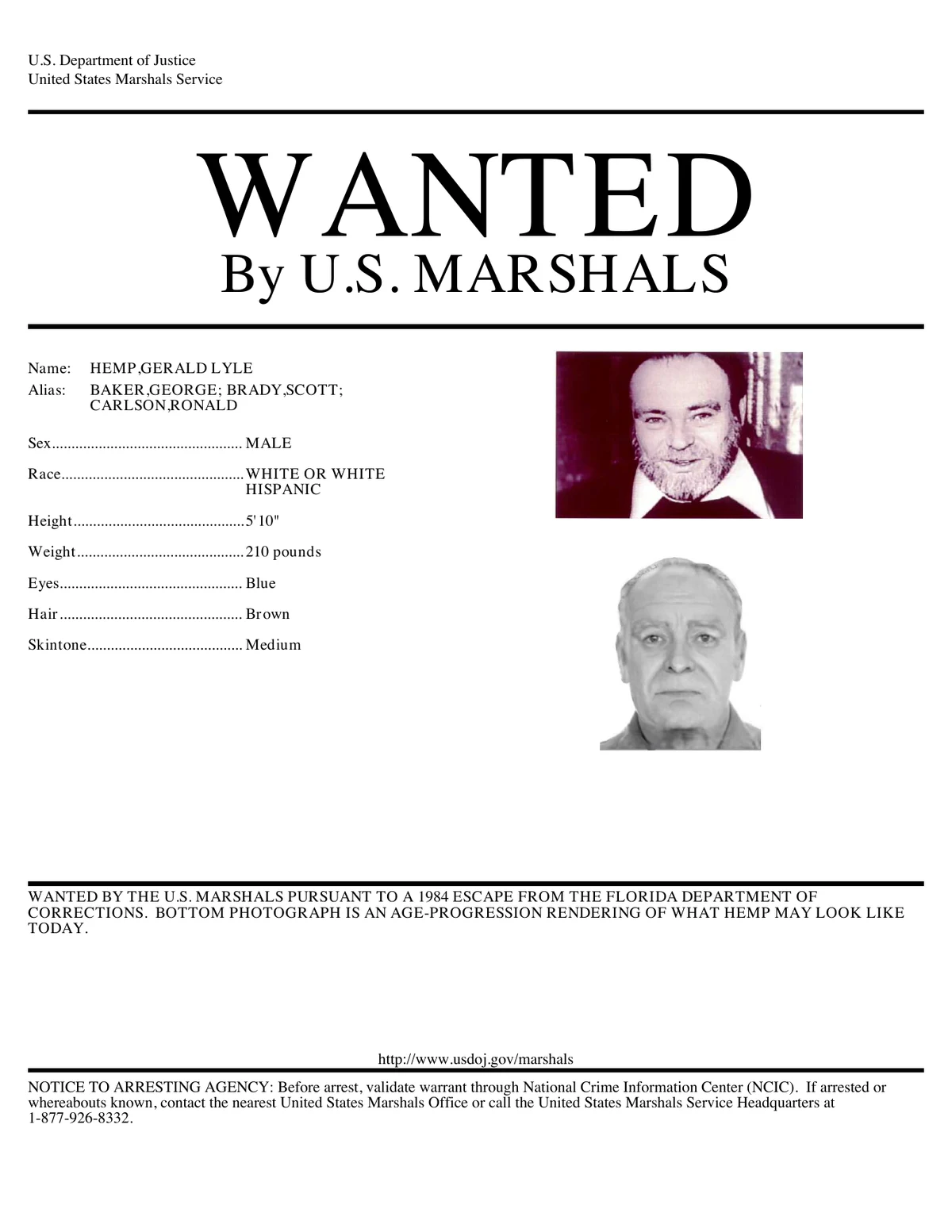
The current U.S. Marshals profile is brief. It lists Hemp as wanted for cocaine and escape in the Northern District of Florida. It describes him as 5 feet 10 inches tall, historically 210 pounds, with blue eyes and brown hair. His current fate remains open.[1]
The U.S. Marshals Service still lists Hemp as wanted. The sources reviewed for this article contain no verified later arrest or death record.
His federal status remains the same: wanted.
Hemp remains listed as a federal fugitive.
Do not approach anyone you believe may be him. Tips can be submitted through the U.S. Marshals Service fugitive page or by calling 1-800-336-0102.
Documents, recollections and disputed claims
| Claim | Current status |
|---|---|
| More than 600 pounds of cocaine were found aboard the Queen Air | Documented. Contemporary accounts differ by one pound. |
| Hemp used multiple identities | Documented. George Baker, Scott Brady and Ronald Carlson remain on the federal profile; Jerry Whittier appears in local and archival reporting. |
| Hemp kept a dentist appointment and then escaped | Documented. Reported from Florida prison and law-enforcement records. |
| He bought bicycles for children in Sevierville | Public recollection. Recalled by two people in the same public Facebook discussion; not independently verified through a contemporary record or interview. |
| He owned Gatlinburg's “cocaine castle” | Unproven and disputed. No supporting deed has been produced. |
| He worked for the CIA | Unproven. An arms-running explanation appeared in testimony, but no corroborating government record was found. |
What the mountains may still be holding
The most useful new evidence may be sitting in Sevier County photo albums and storage boxes: a snapshot from the Open Hearth, a charity program, an airport document, a business card bearing one of Hemp's names or a property record that settles an old argument.
A single reliable record could move one of these claims from local folklore into documented history.
Smoky Mountain Files
Do you have a photograph, program, property document or firsthand memory connected to Gerald Hemp or Jerry Whittier?
Send it through our contact page. Please explain who created the item, when it was made and how you obtained it. We distinguish documents, firsthand recollections and secondhand stories in every update.
Sources and reporting notes
This account was independently reconstructed and written from federal records, contemporary newspaper dispatches, the airport's official history, later archival reporting and public recollections posted beneath the Knox News Facebook story. The July 2026 Knox News article served as the initial story lead.
The Washington Post source below has an unrelated headline because Hemp appeared in that report as a person Alexandria detectives hoped to interview. Its law-enforcement reporting independently documents his Florida transfer, Lantana placement, dentist appointment and disappearance.
- U.S. Marshals Service: Gerald Lyle Hemp fugitive profile
- Gatlinburg–Pigeon Forge Airport: Official airport history
- The Pampa News, June 29, 1981: airport, flight and lease reporting
- The Midland Reporter-Telegram, November 16, 1981: Kageler trial and weapons-run testimony
- Panama City News Herald, October 1, 1982: Hemp arrest report
- The Washington Post, June 16, 1985: law-enforcement account of the transfer, escape and Kageler death
- Jim Balloch archival report, January 3, 2010: Hemp's Gatlinburg identity and trial defense
- Library of Congress: Carol M. Highsmith's 2021 Gatlinburg street photograph — public domain; required credit line included in the caption.
Public-comment record: The local recollections cited above appeared beneath a Knox News Facebook post in July 2026. They are treated as reporting leads and labeled as public recollections unless supported by an independent document or direct interview.
Corrections: We update Smoky Mountain Files when stronger records become available. Send documented corrections through the contact page with the source of the correction.