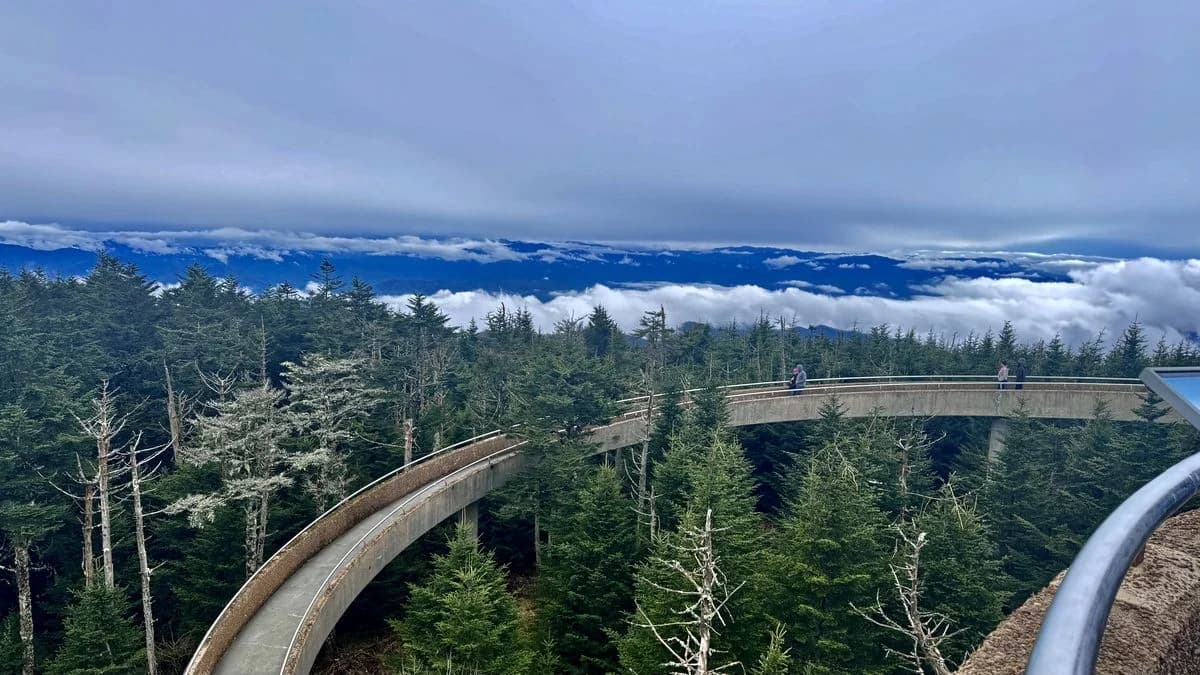
Quick facts
- Kuwohi is the highest peak in the Smokies and the traditional Cherokee homeland.
- Formerly known as Clingmans Dome, the name Kuwohi was restored in 2024.
- Kuwohi Road is a two-lane paved road leading to the Visitor Center and Overlook.
- Parking tags are required for visits longer than 15 minutes.
What to know before you go
Kuwohi, the highest point in the Smokies, offers a stunning perspective on the surrounding landscapes. The name change from Clingmans Dome to Kuwohi reflects a step towards honoring the Cherokee heritage. Before you head out, it's essential to understand the logistics of visiting this peak. The road to Kuwohi is subject to closures due to hazardous weather conditions such as snow and ice. Check for current road conditions and plan your trip accordingly to avoid unexpected detours.


When to go
The best time to visit Kuwohi is when the weather is clear, typically in late spring, summer, or early fall. These seasons offer the most reliable weather, decreasing the likelihood of road closures. However, always keep an eye on the live webcams to make sure you’re in for a clear view before you set off.
How to plan your stop
Start at Newfound Gap Road and take Kuwohi Road to reach the Visitor Center and Overlook. If you plan to park for more than 15 minutes, you will need a parking tag, which costs $5 daily, $15 weekly, or $40 annually. You can find more information on parking fees here. Once at the top, enjoy the views and take a moment to recognize the significance of the name Kuwohi, meaning 'mulberry place' in Cherokee.
What to skip or plan around
If your visit coincides with adverse weather conditions, consider exploring other areas of the Smokies, such as the scenic Foothills Parkway. This area also offers stunning overlooks without the same risk of closures due to elevation. Additionally, aim to visit during weekdays or early in the morning to avoid the busiest times.

Bottom line
Visiting Kuwohi is a rewarding experience for those who plan carefully. The name change is more than symbolic; it invites visitors to embrace the rich cultural tapestry of the region. Remember to check current conditions before making the drive, and consider purchasing a parking tag in advance to ease your journey.
FAQ
Is Kuwohi Road open year-round? The road is subject to closures due to weather conditions, especially snow and ice, so always check current road conditions before you go.
Why was the name changed to Kuwohi? The restoration of the name Kuwohi honors the traditional Cherokee heritage of the region.
When was this guide last updated? This guide was updated in April 2026.
Fast planning checklist
- Check weather and road conditions before leaving Gatlinburg because the final road can close for snow or ice.
- Bring a layer even when lower elevations feel warm.
- Expect the short paved climb to feel steeper than the distance suggests.
- Treat cloud cover as part of the gamble and not as a bad surprise.
Official links to bookmark
- Great Smoky Mountains NPS seasonal roads page
- Great Smoky Mountains NPS Kuwohi name restoration release
- Great Smoky Mountains NPS fees page