The Great Smoky Mountains National Park combines natural beauty, fascinating wildlife, and history.
On top of its smoky-looking mountains and picturesque valleys, there’s much more to this national park.
Here are twelve surprising facts about the Smoky Mountains that you may not have known.
1. Elk Reintroduction

Elk were reintroduced to the Smokies twenty years ago after a long absence and can now be seen in the southeast portions of the park.
You can often see Elk in the morning or evening, but only in specific areas. Read more on our guide to the best places to find them!
2. The Synchronous Fireflies

One of the most special phenomena in the Smokies is the synchronous fireflies.
These fireflies synchronize their flashing light patterns for a few weeks early every summer. It’s so popular that there’s a lottery system to see them!
This page that we update each year should have the most recent data.
3. The Name “Smoky”

The “smoky” mist that names the mountains comes from the natural fog that often hangs over the range.
This fog is created by vegetation exhaling volatile organic compounds. Read more about this.
4. Home to Ancient Mountains

The Smokies are among the oldest mountains in the world! Their age contributes to the diverse ecosystems and the many different species of plants and animals in the park.
5. Wildlife everywhere

There’s a huge amount of wildlife in the Smoky Mountains, including the densest black bear population in the Eastern United States.
There are over 17,000 documented species, but scientists believe thousands more are still waiting to be discovered.
6. The Salamander Capital

The Smoky Mountains are known as the “Salamander Capital of the World.” Over 30 kinds of salamanders roam the park’s ecosystems, making it a haven for these amphibians.
7. Not Just Mountains – A Rainforest Too!

The Smokies’ lush vegetation and abundant rainfall (some areas receive up to 85 inches annually!) transform the landscape into a temperate rainforest.
This unique ecosystem harbors an incredible diversity of plant and animal life.
Like many other national national parks, towering trees, vibrant wildflowers, and a dense undergrowth create a multi-layered, vibrant world.
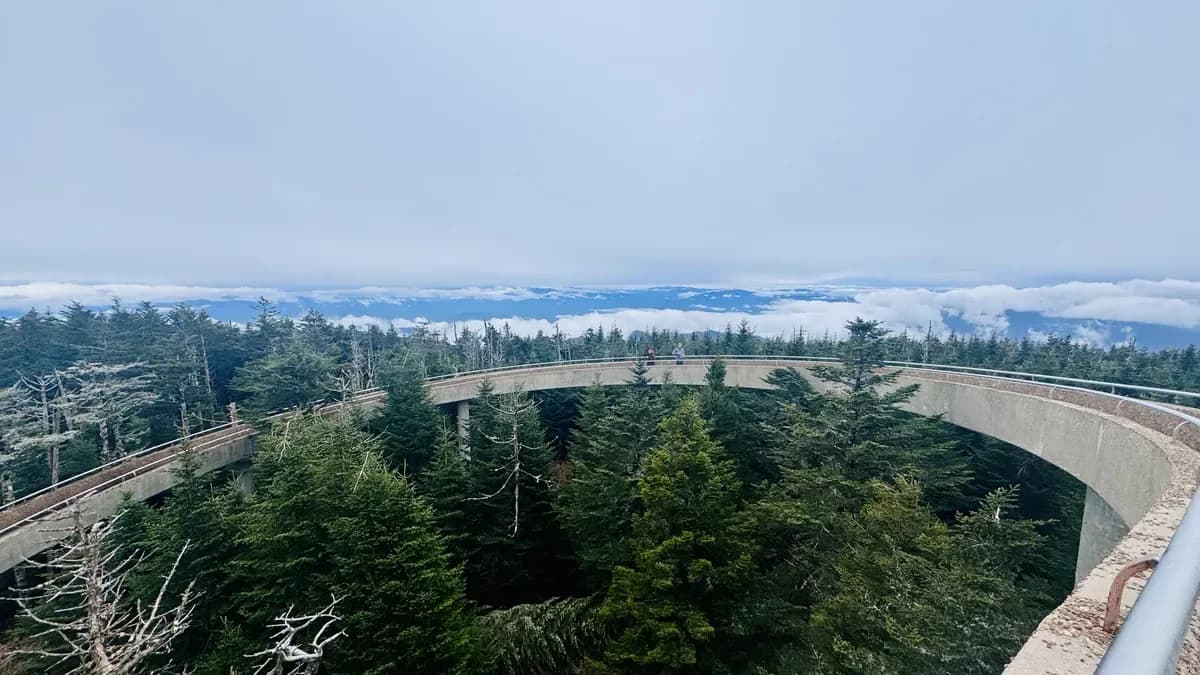
8. Clingmans Dome: The Highest Peak

Standing at 6,643 feet, Clingman Dome is the highest point in the Smoky Mountains and Tennessee.
It offers stunning 360-degree views of the smokies and beyond.
The observation tower at the summit provides a unique vantage point to observe the sea of mountains and valleys, showcasing the park’s grandeur.
9. Elkmont’s Daisy Town (Ghost Town)

Once a thriving resort community, Elkmont is now a town of empty buildings, offering a glimpse into early 20th-century vacation life in the Smokies.
The National Park Service has restored some of the historic cottages, and you can go inside most of them.

10. Spring Wildflowers: A Diverse Display

The Great Smoky Mountains have over 1,500 flowering plants, making it one of the most biologically diverse national parks.
Spring starts early here, with a colorful display of thyme-leaved bluets and other wildflowers from late March through July.
The peak blooming season offers spectacular colors across the park’s landscapes.
The annual Wildflower Pilgrimage in May is a highlight, attracting enthusiasts for educational walks and workshops focused on the region’s floral diversity.
11. Amazing Biodiversity

The Smoky Mountains are designated a UNESCO World Heritage Site for their stunning natural beauty and exceptional biodiversity.
The park’s varied elevations and climates support an exceptional variety of plants, including over 1,500 flowering plant species, more than any other national park in North America.
This rich plant life supports a complex web of ecosystems, further highlighting the Smokies’ global importance for conservation and study.
12. A Free Adventure

Unlike many national parks, exploring the wonders of the Smoky Mountains won’t break the bank.
There’s no entrance fee, though there is a requirement for a parking pass if leaving your car for more than 15 minutes inside the park.