
Smoky Mountain Files · From the Archives
On Saturday, December 30, 1882, a flatboat began crossing the Tuckasegee River near Dillsboro, North Carolina.
The passengers were incarcerated laborers being taken from their stockade to the Cowee Tunnel. Before the boat reached the opposite bank, it overturned.
Nineteen Black men and boys drowned.
North Carolina gained a railroad through the mountains. The people who died building it were buried in an unmarked grave, and their names nearly disappeared from the story.
The Cowee Tunnel disaster
The prison camp stood across the Tuckasegee from the tunnel worksite. A rope stretched over the river guided the flatboat between the banks.
A News and Observer report published January 3, 1883 said thirty incarcerated workers boarded that morning. The river ran deep at the crossing. Water and ice were visible in the boat. According to the report, the passengers moved toward one end, shifting the weight until the vessel capsized.
The newspaper counted eighteen dead. State and prison records later established that nineteen people died.
They ranged from 15 to 55 years old.
Nineteen people, not a number
The state recorded the dead as incarcerated workers. Surviving prison ledgers allow their names to be restored:
Alexander Adams, Nelson Bowser, Orren Brooks, Moses Brown, Albert Cowan, Lewis Davis, David Dozier, Charles Eason, James Fisher, Jim McCallum, Thomas Miller, John Newsom, Robert Robinson, George Rush, Jerry Smith, George Tice, Allen Tillman, Sampson Ward and John Whitfield.
Charles Eason was 15. Research for Western Carolina University’s Shadows of Incarceration exhibit found that he stood five feet two inches tall and weighed 112 pounds when the state recorded him. His sentence was for simple larceny.
Alexander Adams came from Washington County. His father and brother were convicted in the same larceny case and sent to the Cowee labor camp with him. The surviving records preserve the family connection, but little else about their lives together at the camp.
The ledgers preserved measurements, sentences and identifying marks because the state wanted to recapture anyone who escaped. Family relationships and personal lives appear only when another record happened to survive.
That imbalance explains how nineteen names could remain buried in government files while the railroad became a symbol of mountain progress.
The labor system behind the railroad
The Western North Carolina Railroad pushed west after the Civil War, connecting mountain communities to larger markets and opening a corridor later used by industry, residents and visitors traveling toward the Smokies.
North Carolina supplied the labor through its prison system. The Thirteenth Amendment ended slavery while permitting involuntary servitude as punishment for a crime. Southern states then enforced laws that sent disproportionate numbers of Black people into prisons and labor camps.
National Park Service research says seven-eighths of North Carolina’s incarcerated population during this period was Black. Many sentences involved petty offenses, inflated charges and laws aimed at unemployment or ordinary public behavior.
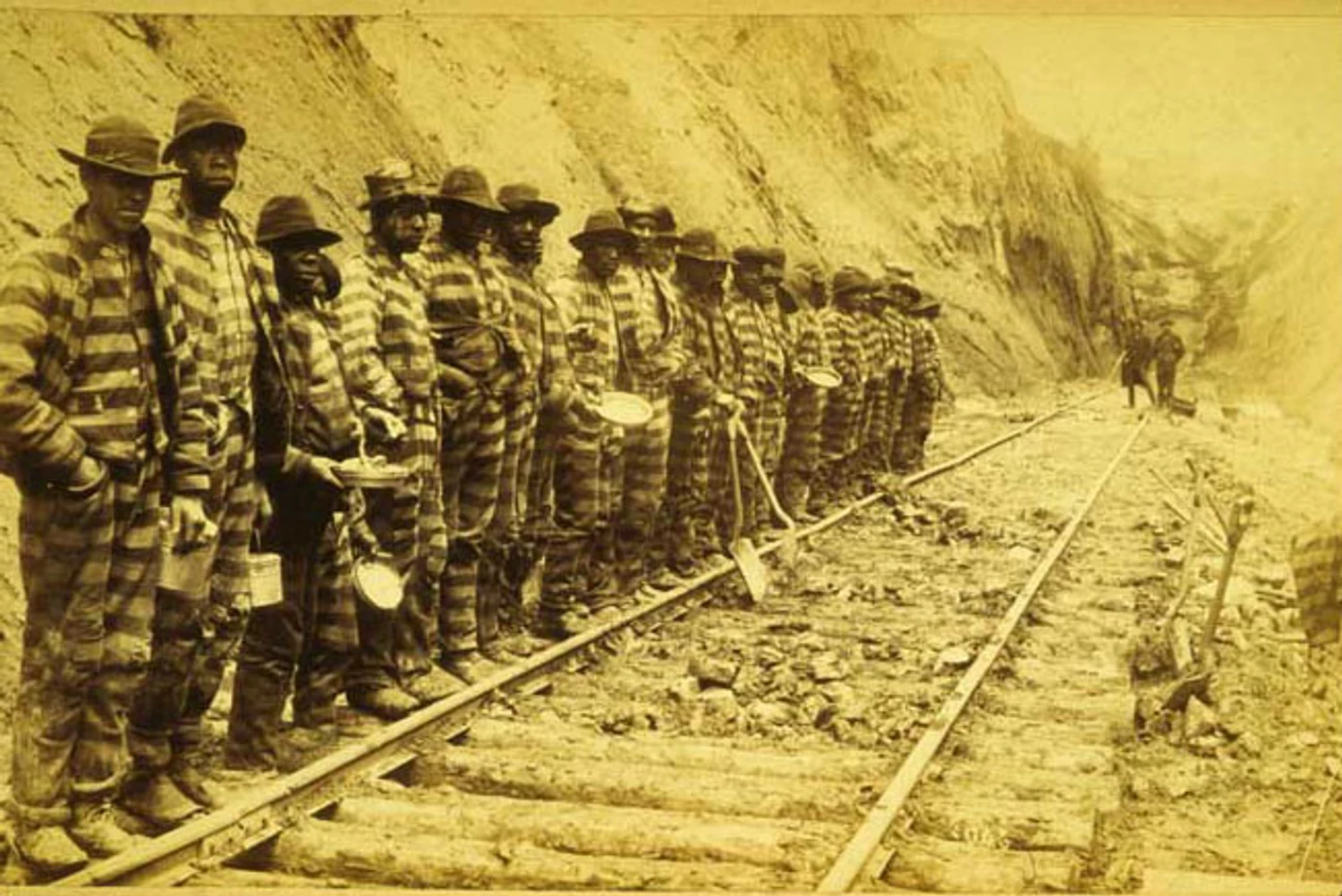
The state contracted incarcerated people to the railroad. Workers cut grades, laid track, handled explosives and dug tunnels through mountain rock. They lived in stockades, converted railcars and camps controlled by armed overseers.
The railroad received labor at a fraction of the cost of free workers. The state retained custody. The workers carried the danger.
What the first report blamed
The first newspaper account drew heavily from railroad and state officials. It described the flatboat as capable of carrying fifty people and said the water inside posed no danger. The men, the account said, panicked and crowded together.
That account placed responsibility on the men and did not examine whether the boat, the guards or the forced-labor transport system contributed to the deaths.
Captain E.R. Stamps, president of the penitentiary’s board of directors, traveled to Cowee to investigate. His 1883 report also attributed the number of deaths to the men grabbing one another in the water. It did not mention chains or leg irons.
Modern accounts from the National Park Service and North Carolina’s historical-marker program say the workers were shackled and that the restraints prevented them from swimming to safety. A much later magazine account also described heavy ankle chains.
The surviving records therefore establish the capsizing, nineteen deaths and forced-labor setting. They disagree about a physical fact central to the deaths: the restraints the men wore in the water.
Two names for one rescue
The rescue story changed too.
Stamps’s contemporaneous report praised an incarcerated man named Samuel Pickett. According to the report, Pickett swam to a small boat and rescued a white overseer, Fleet Foster, along with several incarcerated workers. Stamps asked the governor to pardon him.
Pickett received a pardon and $100.
In 1949, Railroad Magazine published an oral-history version naming Anderson Drake as Foster’s rescuer. That account said Drake was later whipped after money and a pistol belonging to Foster were found in his clothing.
Archival research by the Asheville Museum of History found no mention of Drake in the 1883 investigation or contemporary coverage. Records place him elsewhere in the railroad labor system and confirm that he lived during the period, but they do not connect him to the Cowee rescue.
The strongest contemporary evidence names Samuel Pickett. The Anderson Drake version remains part of the later folklore surrounding the disaster.
Buried beside the work
The bodies were recovered from the river and buried near the tunnel. Sources describe a mass grave or graves along the ridgeline.
No marked burial site gives the nineteen names.
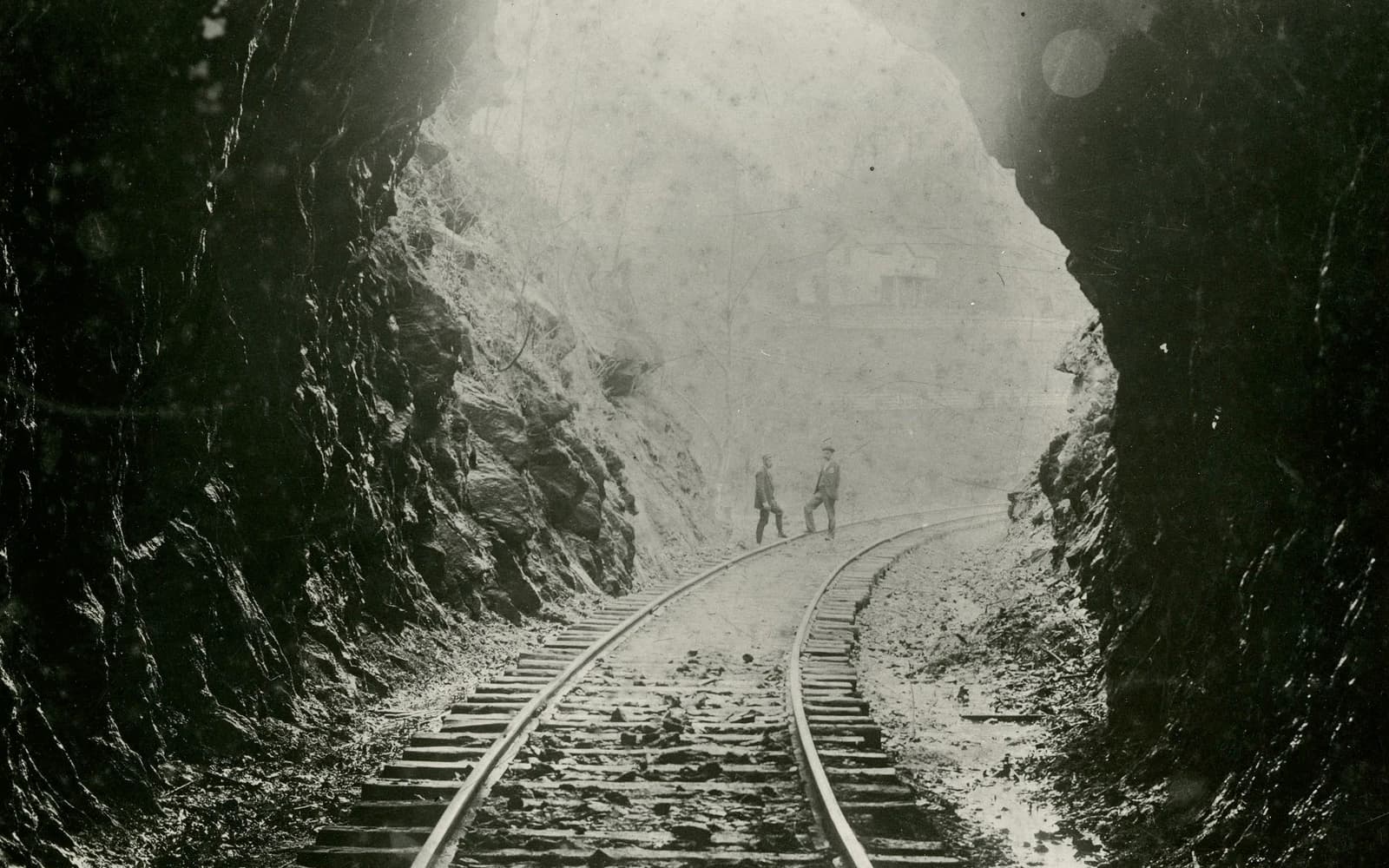
Construction continued. The Cowee Tunnel carried the railroad west, and the Murphy Branch eventually ran 128 miles between Old Fort and Murphy. The line changed commerce and travel across Western North Carolina.
The tunnel survived as physical evidence. The stockade, boat and grave location faded from view.
In May 2024, North Carolina dedicated a highway historical marker near Dillsboro honoring incarcerated laborers and naming the Cowee Tunnel disaster. The marker arrived 141 years after the deaths.
What the Cowee record establishes
| Claim | Current status |
|---|---|
| Nineteen Black incarcerated laborers drowned while being transported to Cowee Tunnel. | Documented. State, prison, NPS and archival records support the event, date and final count. |
| Only eighteen people died. | False. The first newspaper account reported eighteen. Later records identify nineteen people. |
| The men were chained together when the boat overturned. | Disputed in the surviving accounts. Modern NPS and state histories describe leg irons. The 1883 state report omitted restraints and blamed crowding in the water. |
| Anderson Drake rescued overseer Fleet Foster. | Later oral history, unsupported by contemporary records. The 1883 state report credits Samuel Pickett, who received a pardon and $100. |
| The nineteen were buried near the tunnel. | Supported by multiple sources. The exact grave location remains unknown and unmarked. |
| A photograph shows the Cowee 19 at work. | Unproven. Surviving photographs show similar incarcerated crews on the Western North Carolina Railroad; none reviewed for this story identifies the nineteen victims. |
What remains unmarked
The roadside marker records the public event. The burial place remains unidentified on the ground.
Researchers continue looking for the exact grave location, prison-camp structures and records that restore more than physical descriptions to the nineteen lives. Archaeological work at the Cowee camp has begun recovering the material world in which incarcerated laborers lived and worked.
The railroad’s history often begins with what it brought into the mountains. The Cowee record begins with what the state demanded from the people forced to build it.
Sources and reporting notes
- North Carolina Department of Natural and Cultural Resources: Incarcerated Laborers historical marker record.
- National Park Service: African Americans and the Western North Carolina Railroad.
- Western Carolina University: transcript of the January 3, 1883 News and Observer report.
- Asheville Museum of History: Cowee Tunnel research, the 1883 report and disputed rescue account.
- BPR/WUNC: archival research behind the Cowee 19 exhibit and 2024 marker.
- Western Carolina University Mountain Heritage Center: Shadows of Incarceration.
Method: This story was reconstructed from modern state and federal history projects, a university-preserved transcript of the first newspaper report, prison-record research and a museum comparison of the 1883 state investigation with the 1949 oral-history account. Where those records conflict, both versions are identified.
Image rights: The Cowee Tunnel photograph dates to the 1890s and is held by Western Carolina University Hunter Library Special Collections. Its publication date places it in the public domain in the United States. The Thomas H. Lindsey labor photograph is explicitly identified by NCpedia as public domain. Neither photograph is represented as showing the nineteen victims.
Corrections: We update Smoky Mountain Files when stronger records become available. Send documented corrections through the contact page with the record supporting the change.