
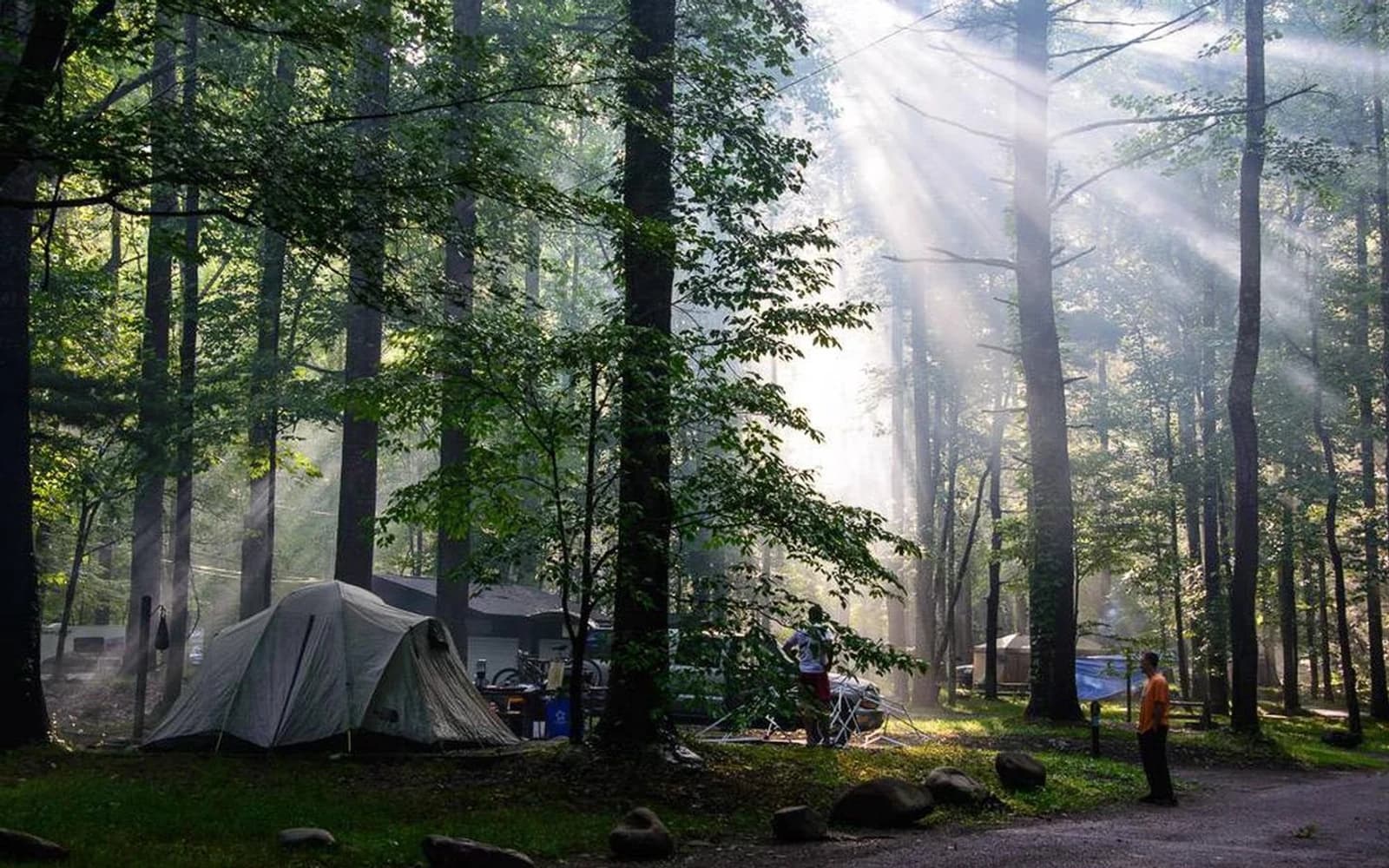
Smoky Mountain Files · Unsolved
On March 18, 1976, a park ranger located a maroon Chevrolet station wagon at Elkmont Campground in Great Smoky Mountains National Park.
The car belonged to a family from Bethesda, Maryland. Five members of that family were dead. The sixth, William Bradford Bishop Jr., had been charged in their deaths.
Inside the station wagon, investigators found bloody clothing and an ax. Bishop and the family’s golden retriever, Leo, were gone.
By the next day, FBI agents and park rangers were searching three trails with tracking dogs. Elkmont had given investigators the clearest evidence of Bishop’s route since North Carolina. It also became the place where that route disappeared.
Before the car reached Elkmont
Seventeen days earlier, on Monday, March 1, the Bishop family was at home in Bethesda.
Annette Bishop was 37. Later archival reporting described her as an artist studying at the University of Maryland. Lobelia Bishop, William’s 68-year-old mother, lived with the family and had helped them buy their home. The three boys were William, 14; Brenton, 10; and Geoffrey, 5.
William Bradford Bishop Jr. worked for the State Department. He had served abroad, spoke several languages and knew how to camp, hike and travel beyond the United States. Those details later shaped the search for him.
That evening, investigators allege, Bishop killed all five members of his family inside their home.
No one reported the deaths that night. When the boys missed school, friends initially believed the family had taken an unplanned ski trip. The house stayed quiet for a week.
By then, five unidentified people had already been found almost 300 miles away.
Five people without names
At 12:40 p.m. on March 2, a North Carolina forest-service worker noticed smoke in a wooded part of Tyrrell County near Columbia. Twenty minutes later, five partially burned bodies were found in a shallow grave.
A gas can, shovel and pitchfork were recovered nearby. Investigators learned that a vehicle resembling the Bishop station wagon had been seen in the area that morning.
The victims had no names yet.
At about 5:30 that afternoon, Bishop used a credit card to buy tennis shoes at a sporting-goods store in Jacksonville, North Carolina. The FBI now describes that purchase as his last confirmed sighting.
On March 8, a concerned neighbor contacted Montgomery County police. Officers entered the Bishop home and found the crime scene. The family’s maroon 1974 Chevrolet station wagon was missing.
Investigators connected the Maryland house to the North Carolina grave. Dental records, jewelry and clothing identified Annette, Lobelia, William, Brenton and Geoffrey.
Dental records, jewelry and clothing identified the victims as Annette, Lobelia, William, Brenton and Geoffrey Bishop. Investigators then focused their search on Bradford Bishop.
The man the FBI was looking for
Bishop was 39 when he disappeared. He had studied at Yale and Middlebury, worked in the Foreign Service, held overseas assignments and learned to fly while living in Botswana. The FBI described him as an experienced outdoorsman who spoke English, French, Italian, Serbo-Croatian and Spanish.
Investigators reconstructed purchases made before the deaths. Montgomery County police reported that Bishop bought a small sledgehammer and gasoline can at Montgomery Mall on March 1, then bought gasoline at the neighboring station.
A Montgomery County grand jury charged him with five counts of murder. A federal charge followed for unlawful flight to avoid prosecution.
Bishop has never faced those charges in court. The language matters: an indictment accuses; a trial determines guilt. His disappearance denied the victims’ family both a trial and an answer.
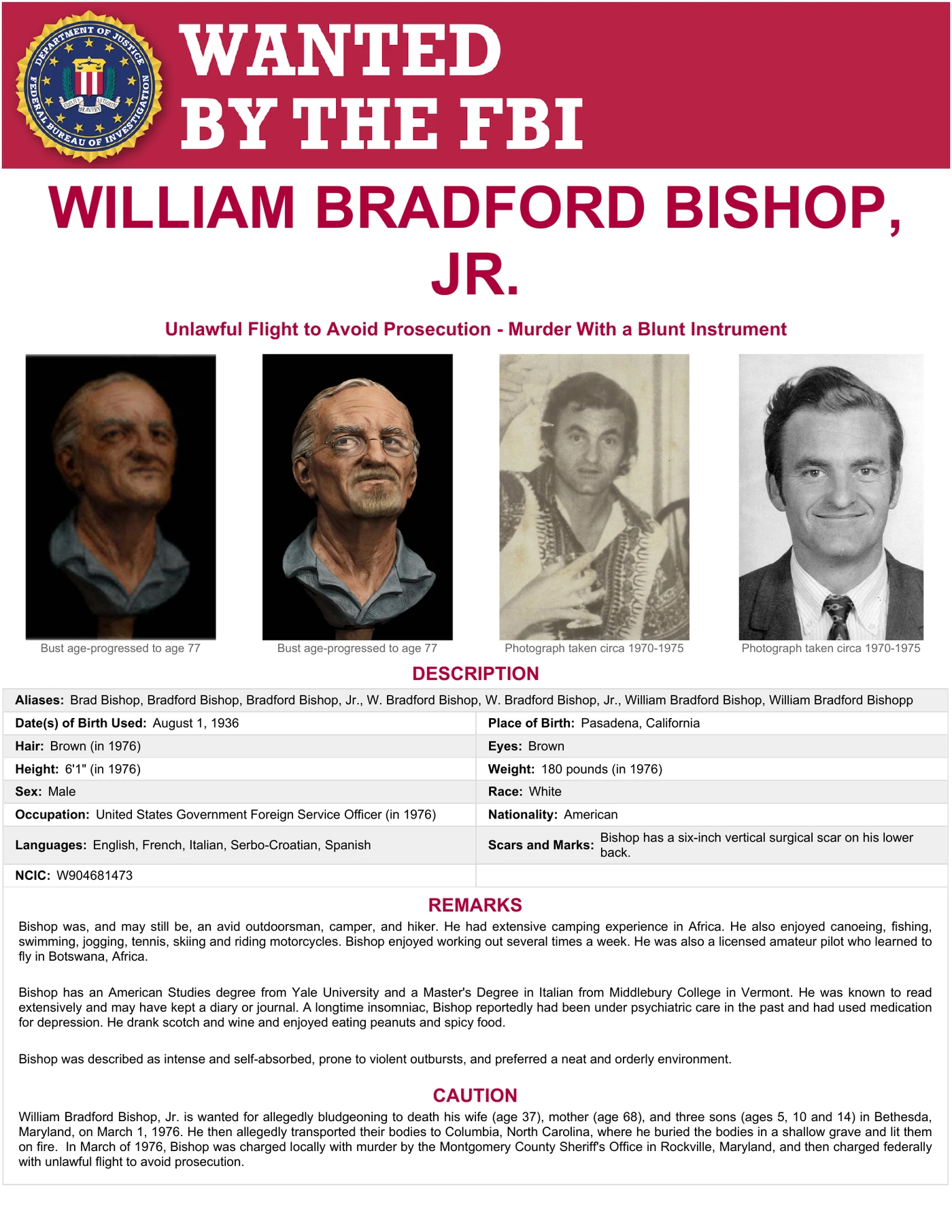
A station wagon in the Smokies
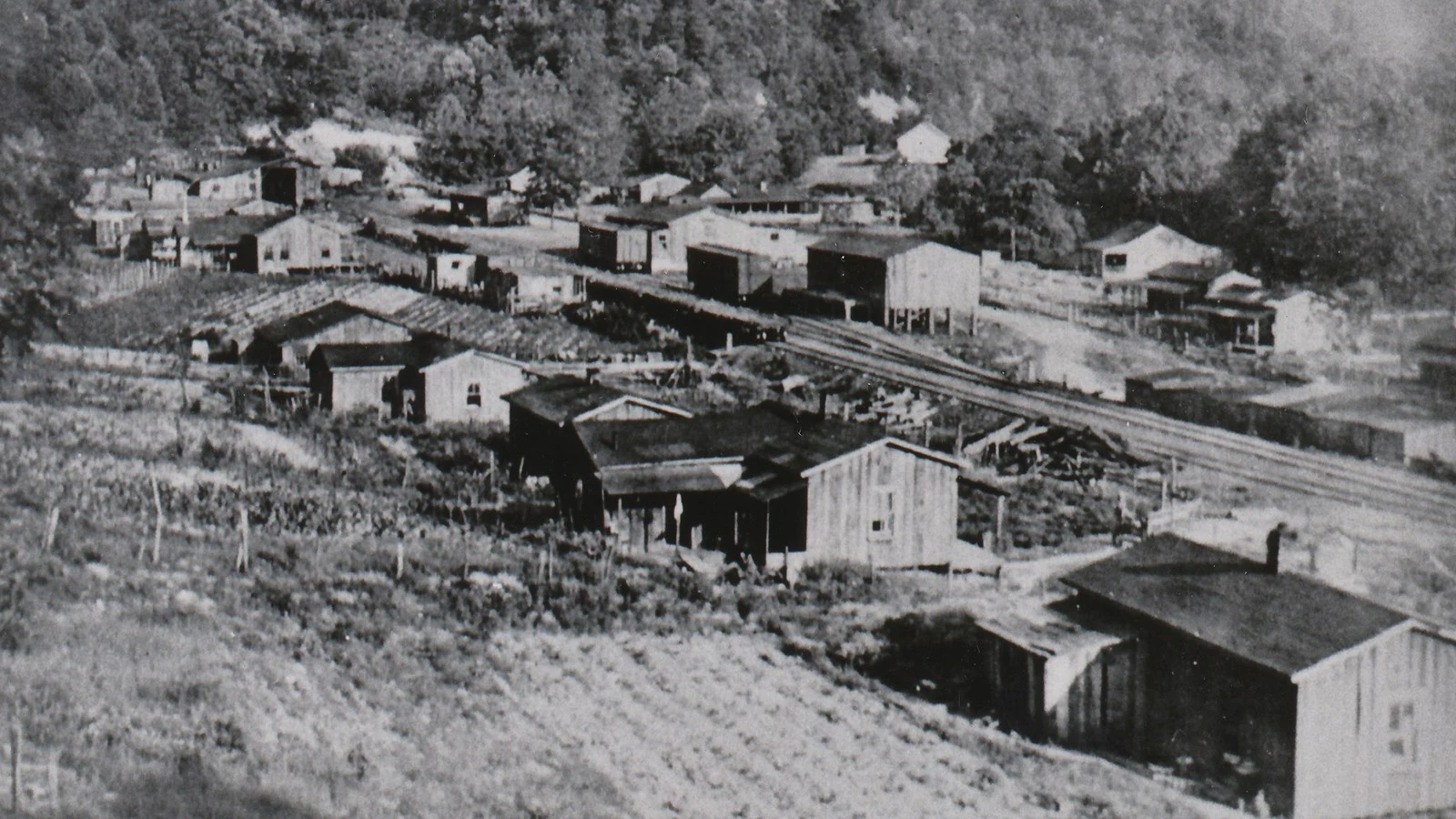
Elkmont sits inside the Tennessee side of Great Smoky Mountains National Park, reached from Little River Road west of Sugarlands. Its campground, roads and trailheads occupy the former lumber town that once ranked among Sevier County’s largest communities.
In 1976, the campground placed a fugitive’s abandoned car beside routes leading deeper into the mountains. A United Press International report published March 19 said FBI agents and park rangers planned to fan out with tracking dogs along three wilderness trails from the area where the station wagon was found.
The same report described Bishop as capable of surviving outdoors. Investigators considered the possibility that he had entered the backcountry and died by suicide. They also had to consider that a skilled traveler had chosen Elkmont as a place to leave the car and continue by another route.
The search produced no documented trail beyond the station wagon.
What the car could answer
The station wagon connected the Bethesda house, the North Carolina grave and the Smokies. Blood and other items inside supported investigators’ account that the vehicle had carried the victims.
Decades later, the car yielded another piece of evidence. In 2015, the FBI announced that its laboratory had identified Bishop’s DNA from a cigarette butt recovered from the station wagon in 1976. Investigators could compare that profile against unidentified remains and law-enforcement databases.
The DNA profile now allows investigators to compare Bishop with unidentified remains and law-enforcement records. His route out of Elkmont remains unknown.
Reports of sightings arrived from the United States and Europe. One tip led authorities to exhume an unidentified man in Alabama in 2014. DNA excluded the Alabama man, leaving Bishop’s whereabouts unresolved.
Five names the fugitive story can hide
Public attention has often centered on Bishop’s languages, diplomatic career and ability to travel. Annette, Lobelia, William, Brenton and Geoffrey were the five people whose lives were taken.
Annette, Lobelia, William, Brenton and Geoffrey did not choose any part of that story.
When Montgomery County officials renewed the case in 2014, they spoke about the five people killed in a home where they trusted the person accused of taking their lives. The search, they said, remained a debt to the victims, their relatives and the community.
The FBI added Bishop to the Ten Most Wanted list in 2014 and removed him in 2018 after determining that he no longer fit the list’s criteria. Removal cleared a place on a publicity list. The FBI still carries his fugitive profile, and the charges remain unresolved.
What the Elkmont evidence establishes
| Claim | Current status |
|---|---|
| A ranger found the Bishop family station wagon at Elkmont on March 18, 1976. | Documented. Montgomery County police include the discovery in their official chronology, and newspapers reported the search the next day. |
| Bishop was convicted of killing his family. | False. A grand jury indicted him on five murder counts, and he faces a federal unlawful-flight charge. His disappearance prevented a trial. |
| Bishop escaped by joining hikers in the park. | Unproven. The vehicle’s location and Bishop’s outdoor experience led investigators to search trails. No record establishes that he entered the backcountry or the Appalachian Trail. |
| Bishop died in Great Smoky Mountains National Park. | Unknown. Searchers found no body or other evidence establishing his death in the park. |
| A missed promotion explains the killings. | Unproven. Later accounts describe a career disappointment, but investigators have never established a single motive. |
| Removal from the Ten Most Wanted list means Bishop is no longer wanted. | False. The FBI removed him from that publicity list in 2018 and continues to publish an active wanted profile. |
What Elkmont left unanswered
No public record identifies anyone who saw Bishop abandon the station wagon. Investigators have not established whether he left on foot, entered another vehicle or placed the car there to misdirect the search.
Leo, the family’s golden retriever, also vanished.
The FBI continues to list Bishop as wanted. Elkmont remains his last documented connection to the Smokies.
The station wagon remains the last physical place where the Bishop case touches the Smokies. It carried evidence of five lives lost and offered no clear direction toward the man accused of taking them.
Sources and reporting notes
- Federal Bureau of Investigation: current William Bradford Bishop Jr. fugitive profile and poster.
- Montgomery County Police: April 10, 2014 investigative chronology.
- Pampa Daily News, March 19, 1976: United Press International report, “Bishop searchers comb Smoky Park”.
- FBI Baltimore: April 10, 2015 case update and DNA result.
- FBI Ten Most Wanted history: Bishop’s 2018 removal from the list.
- The Washington Post, March 1, 1986: Donald P. Baker’s ten-year retrospective.
- National Park Service: Elkmont Campground and Old Town of Elkmont.
Method: This account was independently reconstructed from current law-enforcement records, a contemporaneous wire report, later archival reporting and National Park Service place records. Charges are described as allegations because Bishop has never been tried. Later theories were included only where they explain the historical search or a persistent public misunderstanding.
Image rights: The Elkmont images are credited by the National Park Service as NPS photos. The Bishop image is the FBI’s downloadable wanted poster. They are reproduced as original U.S. Government works for editorial reporting; no claim is made to original U.S. Government works. Agency names and insignia do not imply endorsement.
Corrections: We update Smoky Mountain Files when stronger records become available. Send documented corrections through the contact page with the record supporting the change.