
What Happened
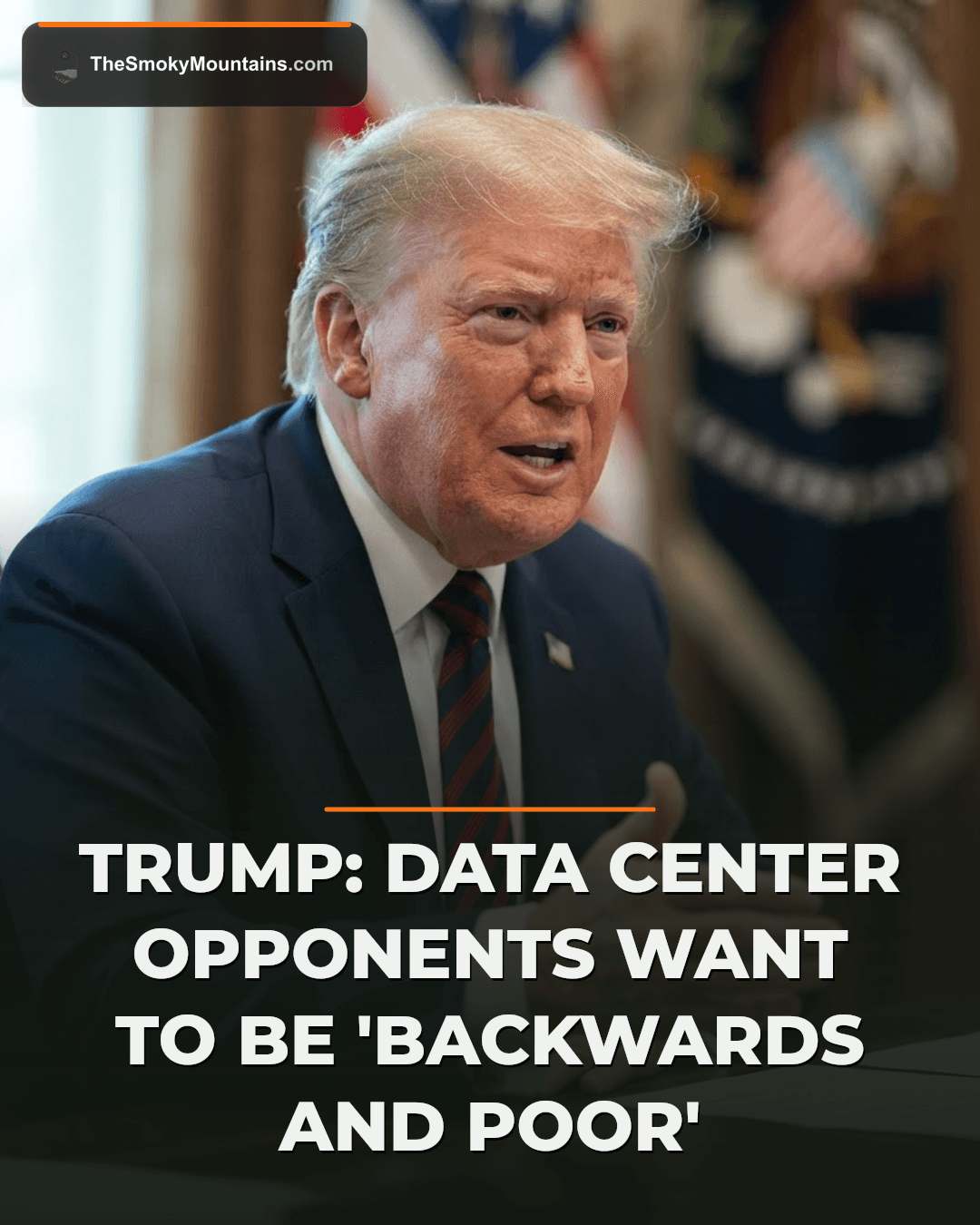
Former President Donald Trump criticized communities opposing data center construction during a campaign rally in Macon, Georgia, on August 29, 2026. Referring to these communities, Trump stated, 'They want to be backwards and poor. They don't want the jobs, they don't want the billions of dollars of investment, they want to look at their empty fields and dying towns.'
His remarks come as a recent national poll shows a significant increase in local opposition to such projects. A Pew Research Center survey released on August 25 found 52% of Americans now oppose major data center developments in their own communities, up from 36% in a similar 2023 poll.
The Details
The data center industry is undergoing massive growth, with over $120 billion invested in new U.S. infrastructure in 2025, driven by demand for artificial intelligence and cloud computing. However, local opposition has grown due to concerns about immense water usage for cooling, strain on local power grids, noise pollution, and the conversion of large land tracts with minimal proportional local employment.
High-profile local conflicts include Prince William County, Virginia, where an approved Digital Gateway project faces ongoing lawsuits, and Columbus, Ohio, where a proposed Google data center will be subject to a voter referendum in November 2026. A July 2026 Department of Energy report projected data centers could account for up to 9% of total U.S. electricity generation by 2030, underscoring the scale of the debate.
Political and Industry Reaction
Democratic leaders, including Senator Elizabeth Warren, criticized Trump's comments on August 30, with Warren calling them 'a disgraceful insult to communities rightly concerned about their water and energy futures.' Some congressional Republicans, like Representative Frank Lucas, echoed Trump's economic arguments, stating that 'local obstructionism is creating a national security risk by slowing our AI infrastructure build-out.'
The Information Technology Industry Council issued a statement on August 30 acknowledging 'legitimate local concerns' and calling for a national dialogue on siting and sustainability, but did not directly address Trump's specific wording. Outlets report a divergence in reception, with some states actively recruiting data centers while others, particularly in areas facing water scarcity, show stronger opposition.